What makes a learning day go better? Often, it is the little helpers. When you put toys away, bring a pencil, or clean a small mess, you help your space feel calm and ready. That is an important job, even for a young child.
A responsible helper tries to do the right thing. A helper handles materials gently, listens carefully, and takes care of things. You can be a helper during online learning, at home, or in a club or play group.
Responsible means you try to do your job, take care of things, and make safe choices. Helper means a person who does a job to make things better for others.
Helping is one small way to practice a job. A job is work you do. Right now, your jobs are simple: clean up, carry, listen, and try again. These small jobs help you grow strong skills for later.
[Figure 1] You can help in many ways in a home learning space. You can put crayons in a box, place books on a shelf, bring paper to the table, throw trash away, and push in your chair. You can also help by using a quiet voice when someone is talking on a video call.
Another way to help is to take care of shared things. If you use scissors, you put them back. If you spill water, you get a cloth with an adult. If a toy is in the way, you move it so the floor is safe.
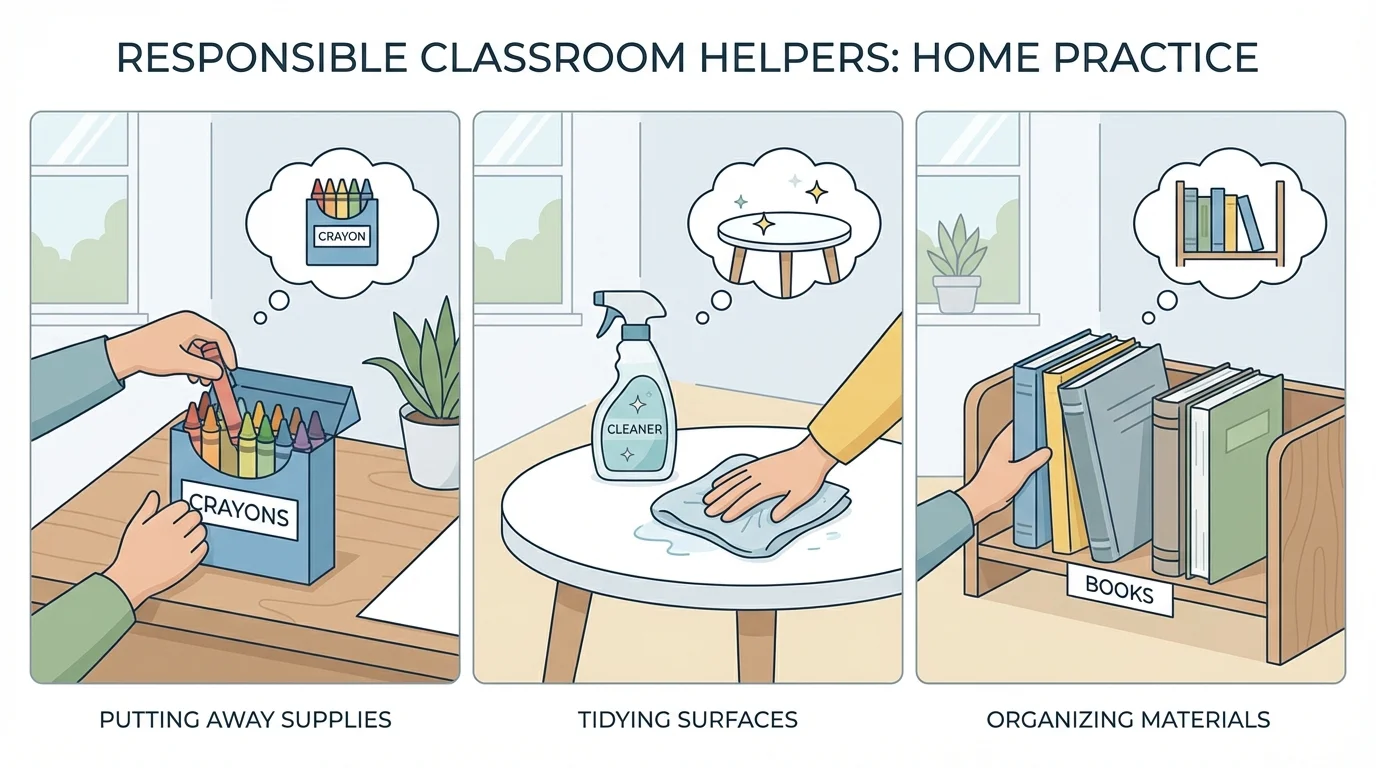
You can help people, too. You might bring a tissue, hold a door at home, or say, "I can help." When you wait for your turn to speak online, you are helping everyone hear and learn.
A small helper moment
Step 1: You see blocks on the floor near your learning table.
Step 2: You stop and pick them up.
Step 3: You place them in the bin.
Step 4: You tell the grown-up, "All done."
This is helpful, safe, and kind.
These little actions are part of teamwork, and [Figure 2] shows a simple helper routine. Teamwork means people help each other. Even when you learn from home, you are still part of a learning team with your family and your teacher online.
Good helpers follow a simple routine. First look. Next ask. Then do the job. After that, finish the whole job. Last, tell the person you are done.
Look: What needs help? Is there a mess? Is something missing?
Ask: "Can I help?" or "What should I do?"
Do: Use careful hands and a calm body.
Finish: Put everything where it belongs.
Tell: Say, "I'm done," so the grown-up knows.
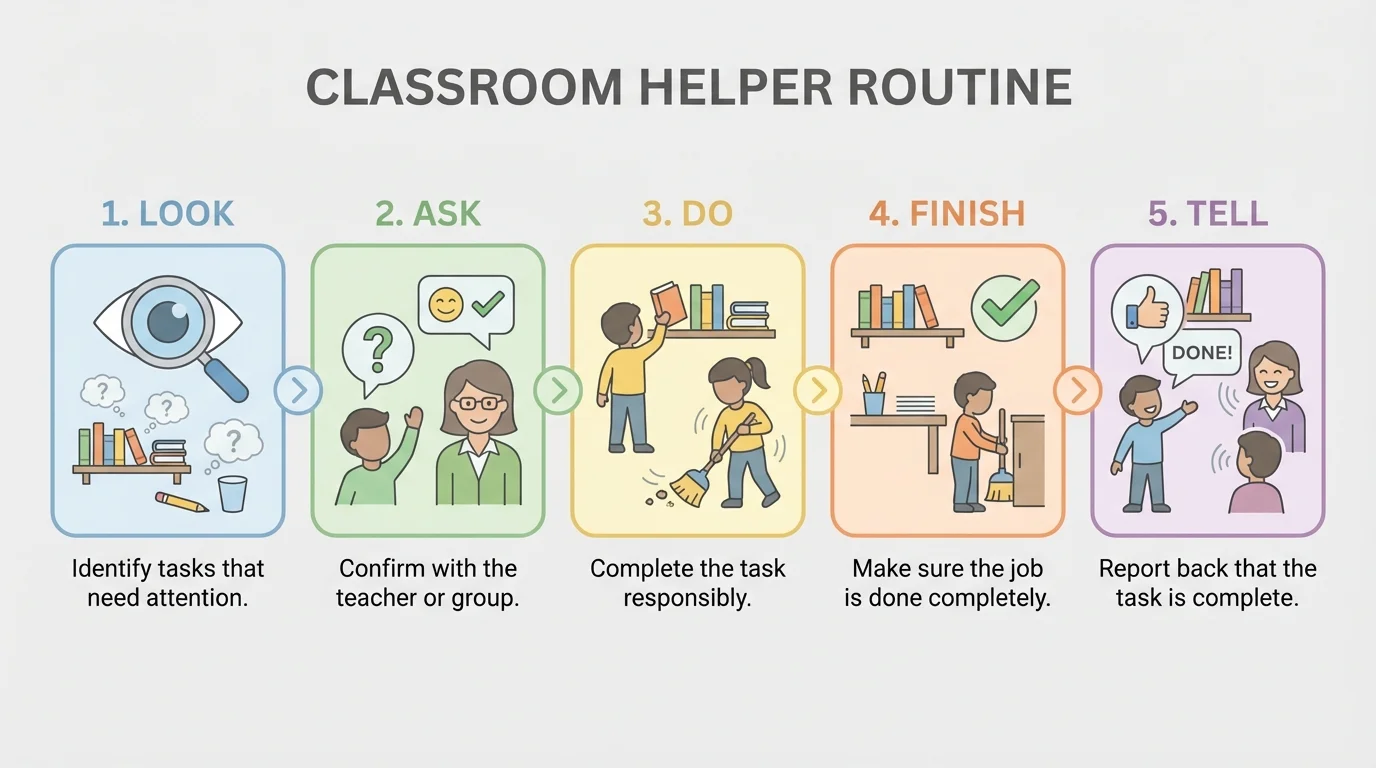
A helper also shows routine. A routine is something you do in the same order many times. When you follow your helper routine, jobs feel easier because you know what comes next.
Small jobs build big skills
When you help often, you practice listening, noticing, finishing, and caring for materials. These are the same kinds of skills adults use at work every day.
Try this in your day: before learning starts, find one thing to put away. After learning ends, check for one thing to clean. A tidy space can make learning easier. Small helper jobs are just right for you.
[Figure 3] Helping changes the whole space. In a tidy, ready area, it is easier to find your pencil, sit down, and begin. In a messy area, people may feel upset, lose time, or trip over things.
When you help, adults learn they can trust you. Trust means they believe you will try to do the right thing. Trust grows when you listen, finish, and tell the truth if you need help.
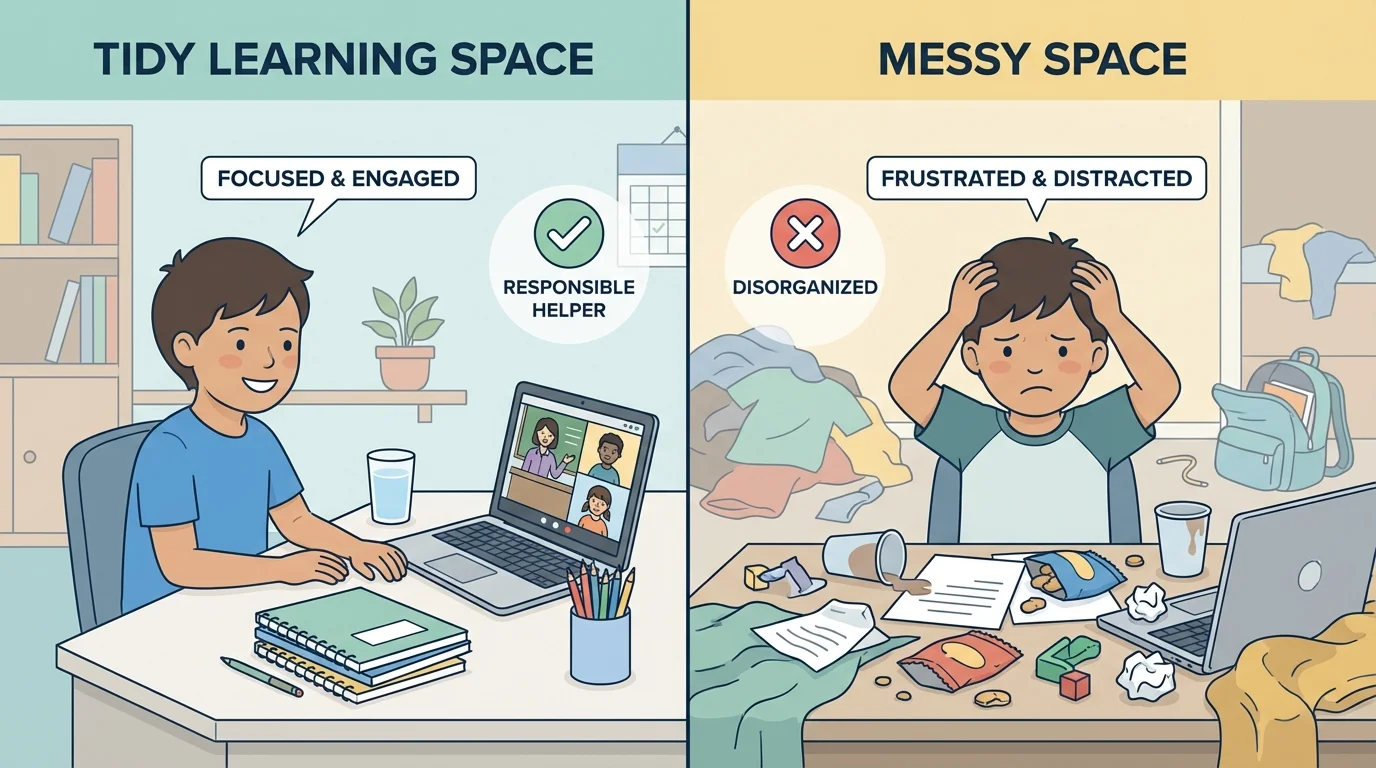
Helping also feels good. You may feel proud when the table is clean or when your teacher hears you waited quietly online. That proud feeling means you are growing.
Many grown-up jobs use the same habits children use as helpers: arriving ready, taking care of tools, cleaning up, and working kindly with others.
Later, the same habits matter in many places. A cook puts tools back. A nurse gets supplies ready. A builder cleans up safely. A helper today is practicing for real jobs tomorrow. The clear helper steps from [Figure 2] work for many grown-up tasks, too.
Sometimes a job feels too big. That is okay. You do not have to do everything alone. You can say, "Help me, please," or "Can we do it together?" Asking for help is a smart helper choice.
If you forget a job, stop and try again. Take a breath. Look at the space. Pick one thing. Staying calm and finishing the job matters just as much as having a tidy room in [Figure 3], because both show care and effort.
"Many hands make light work."
You can be a responsible classroom helper by doing small things with care every day. Put away, wipe up, carry, listen, wait, ask, finish, and tell. Those are powerful helping skills.
