Have you ever done something that felt hard at first, and then one day it felt easier? That is a big clue that you are growing. When you keep track of small steps, you can see your progress, and that helps you feel proud and ready to keep going.
A goal is something you want to do, learn, or finish. A goal can be small, like putting your crayons away each day. A goal can also be bigger, like reading a short book by yourself. The best goals for now are small, clear, and specific.
Goal means something you want to work toward. Progress means the little steps you make as you get closer. Growth means getting better over time, even a little bit at a time.
If a goal is too big, it can feel tricky. If a goal is small, you can start right away. For example, "I will clean my whole room forever" feels huge. "I will put my books on the shelf today" feels just right.
Choose one thing you can practice at home. You might pick getting dressed by yourself, feeding a pet with help, reading for a few minutes, or putting toys in a bin after playtime. A good small goal is something you can try again and again.
You can ask yourself three simple questions: What do I want to do? Can I do one small part of it today? Who can help me if I need help? If you can answer those questions, your goal is ready.
Small goal ideas
Step 1: Pick one goal.
Example: "I will put my shoes by the door every day."
Step 2: Say what success looks like.
Success means your shoes are in the right spot.
Step 3: Try it each day.
Each day you remember, you mark your progress.
When your goal is simple, it is easier to keep going. That matters because doing a little bit many times often works better than trying to do everything at once.
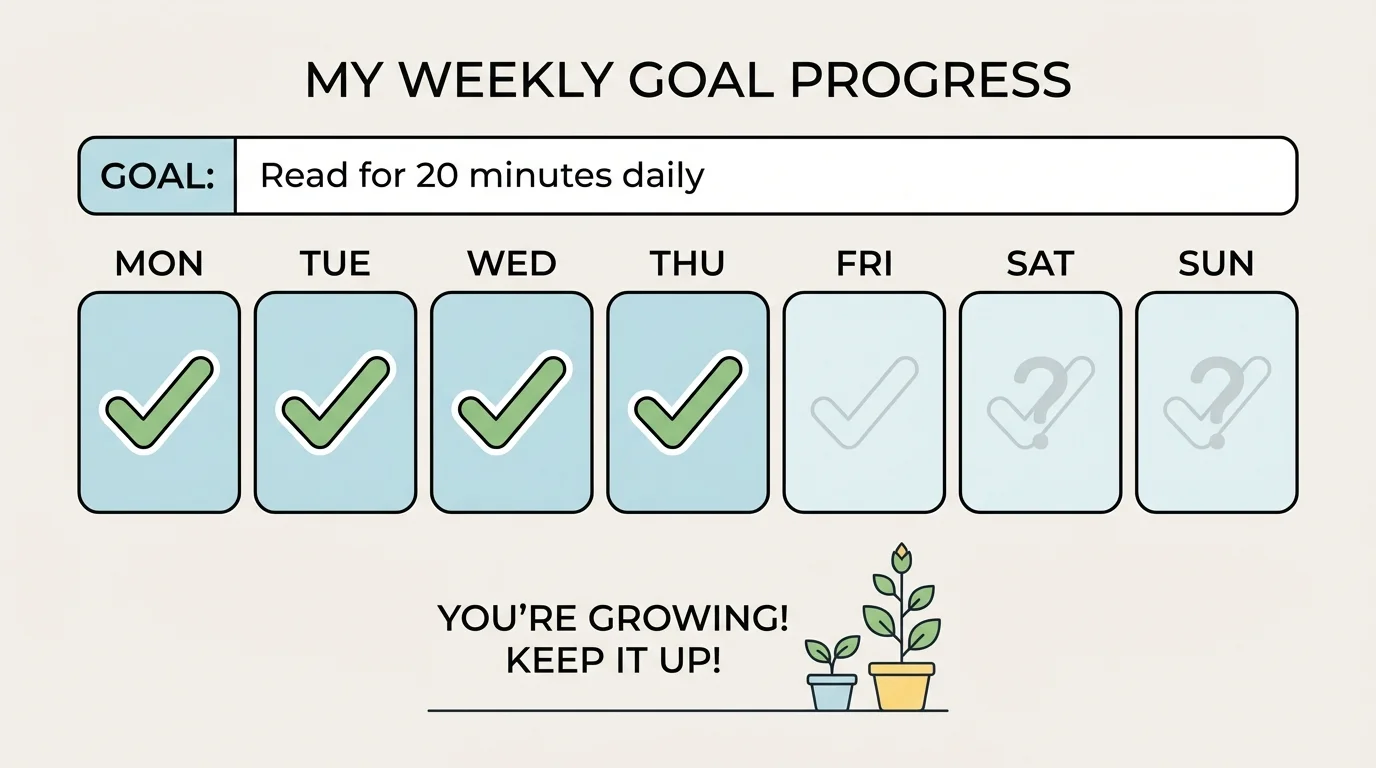
Progress is easier to notice when you can see it. A simple chart, like the one in [Figure 1], can help you mark boxes one by one. You do not need anything fancy. You can use a paper chart, a row of stars, stickers, smiley faces, or check marks.
One easy way is to make a line of boxes. If your goal lasts one week, you can draw boxes for each day. Each time you do your goal, mark one box. If you mark boxes on five days, that means you practiced five times.
Another way is to use jars or cups. Put one cotton ball, bead, or paper square into the jar each time you finish the goal. Watching the jar fill up helps you see that your effort is adding up.
Small steps count
You do not have to finish everything at once. If your goal is reading, reading one page is a step. If your goal is cleaning up, putting away one group of toys is a step. Small steps help your brain feel calm and ready to continue.
Tracking matters because it reminds you, "I am doing it." If you do not track, you may forget your hard work. Then you might think you are not improving, even when you really are.
Growth means getting a little better over time. As shown in [Figure 2], you may need a lot of help at first and less help later. Growth does not always look fast. Sometimes it looks like trying again, making fewer mistakes, or finishing a little more on your own.
Maybe on Monday you needed help opening your lunch container at home. On Tuesday you opened part of it. On Wednesday you did it by yourself. That is growth. Maybe you still needed extra time, and that is okay too.
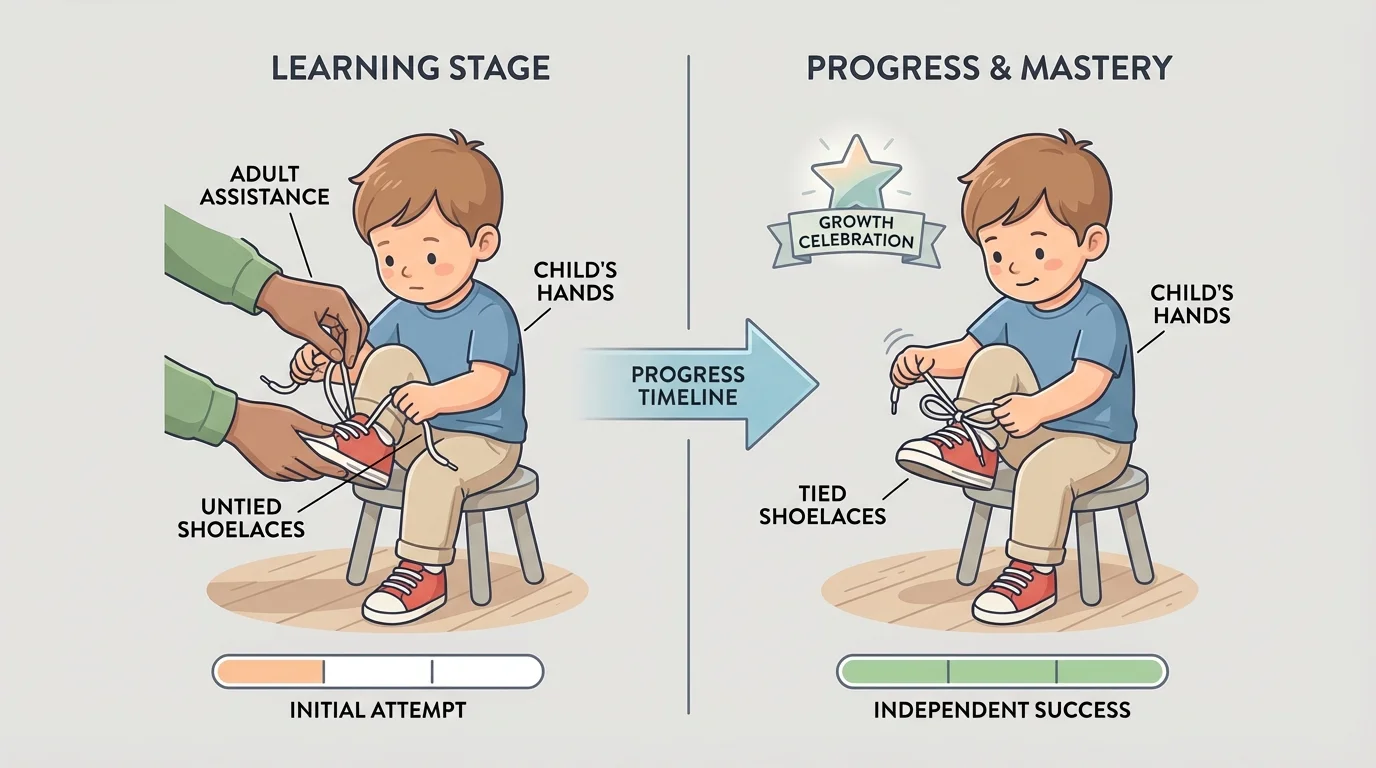
Growth can sound like different words too. At first you might say, "I can't do it." Later you might say, "I can do part of it." Then you might say, "I can do it by myself." Those words show change.
Your brain grows stronger when you practice. Each try helps you learn, even when the try is not perfect.
If you miss a day, that does not erase your growth. A missed day is just one day. You can start again the next day. When you look back at your chart, you can still see the many times you showed effort.
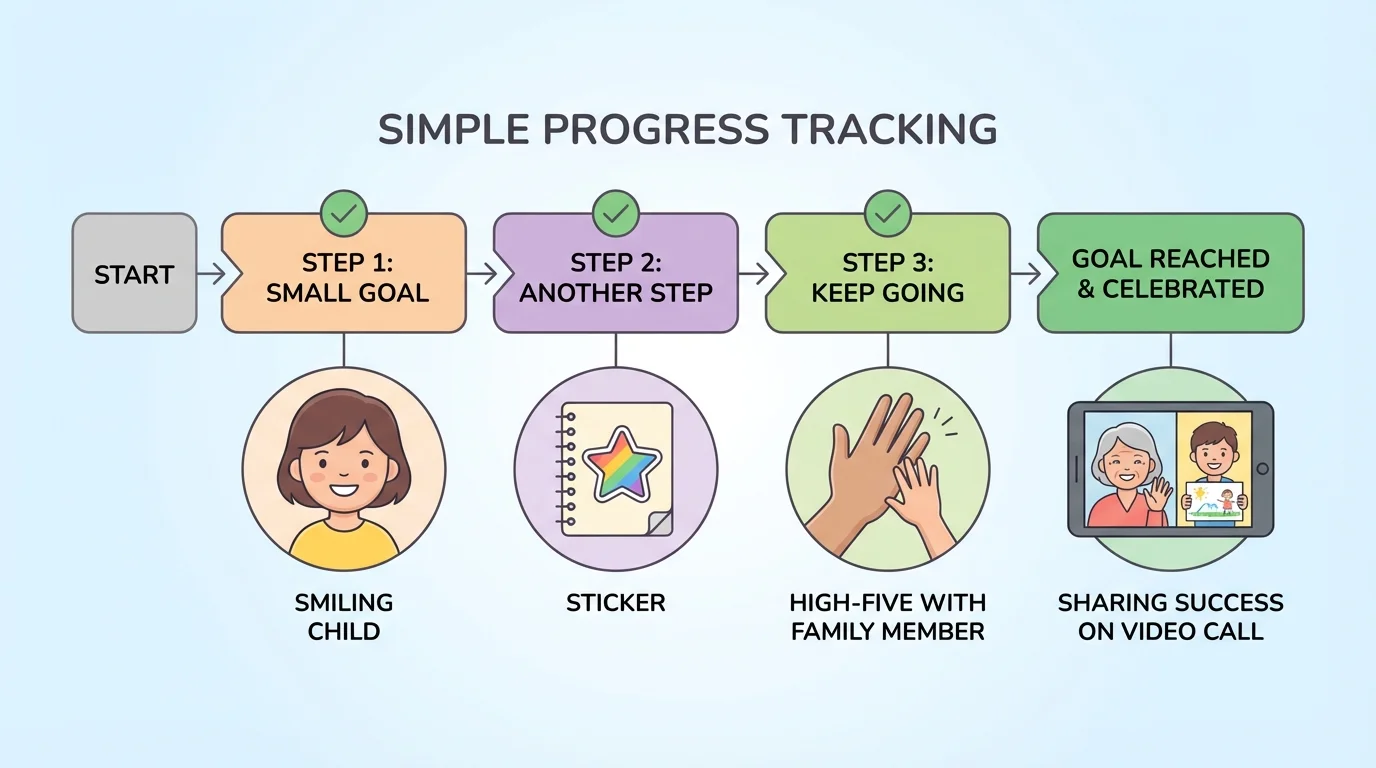
When you reach a step or finish a goal, celebrate your effort. [Figure 3] shows simple celebration choices. A simple celebration fits the hard work and can include easy choices like a high-five, a sticker, a happy dance, or sharing your success with a trusted adult on a video call.
Celebrating does not need to be big or expensive. You can clap for yourself, tell a parent or caregiver, put a sticker on your chart, choose a favorite song, or say, "I did it." You can also share your progress with your online teacher by sending a message or showing your chart during a video lesson if a grown-up says that is okay.
Celebration is important because it helps your brain connect hard work with good feelings. That makes it easier to try again tomorrow. When people never notice their work, they may want to stop. When they notice it, they often keep going.
"Little by little, a little becomes a lot."
You can celebrate effort and growth, not just finishing. If you tied one shoe by yourself today, that is worth noticing. If you read for longer than last time, that matters too.
Some days your goal may feel easy. Some days it may feel hard. That is normal. Hard days do not mean you failed. They mean you are still learning.
Try kind self-talk. You can say, "I am learning." "I can try one step." "I can ask for help." Those words help you stay calm. Asking for help is a strong choice, not a weak one.
What to do on a hard day
Step 1: Stop and take a slow breath.
Step 2: Do one small part of the goal.
Step 3: Ask a trusted grown-up for help if you need it.
Step 4: Mark the step you did, even if it was small.
That is another reason charts help. As shown earlier, you may not be perfect yet, but you are still moving forward. One small step is still a real step.
Here are some goals a child your age might use at home:
| Goal | How to track it | How to celebrate |
|---|---|---|
| Put toys away | One check mark each day | High-five with family |
| Read at home | One sticker for each reading time | Tell someone what you read |
| Brush teeth | Morning and night boxes | Happy dance |
| Feed a pet with help | Color one paw print each time | Say, "I helped!" |
Table 1. Examples of simple goals, ways to track them, and safe ways to celebrate.
If you use a chart for brushing teeth, you might have two boxes each day: one for morning and one for night. If you mark both, you can feel proud of remembering your routine. If you forget one time, you just try again later.
When you celebrate, choose something safe, simple, and kind. The celebration in [Figure 3] reminds us that a smile, a sticker, or sharing good news can be enough. Your hard work is the important part.
You have done hard things before. You learned to walk, talk, and do many daily jobs step by step. New goals work the same way: small tries, practice, and patience.
Tracking progress helps you see what is true: you are learning. Celebrating growth helps you keep going. Small goals, small steps, and small celebrations can help you do big things over time.
