Have you ever found a tiny seed stuck to your sock or seen a bee visit one flower after another? That is a big clue from nature. Plants cannot walk, but many plants still spread to new places. They get help from animals. People can look closely at that help and make a simple tool or object that works in a similar way.
A model is a simple copy, drawing, object, or idea that helps us show how something works. A model is not the real thing. It is a smaller or simpler version that helps us think and learn.
For example, a toy car is a model of a real car. It does not drive on a highway, but it shows the shape and parts of a car. In science, we also make models to show how animals, plants, and tools work.
Model means a simple thing that helps us explain or show an idea. Evidence means what we notice, observe, or learn that helps us know something is true.
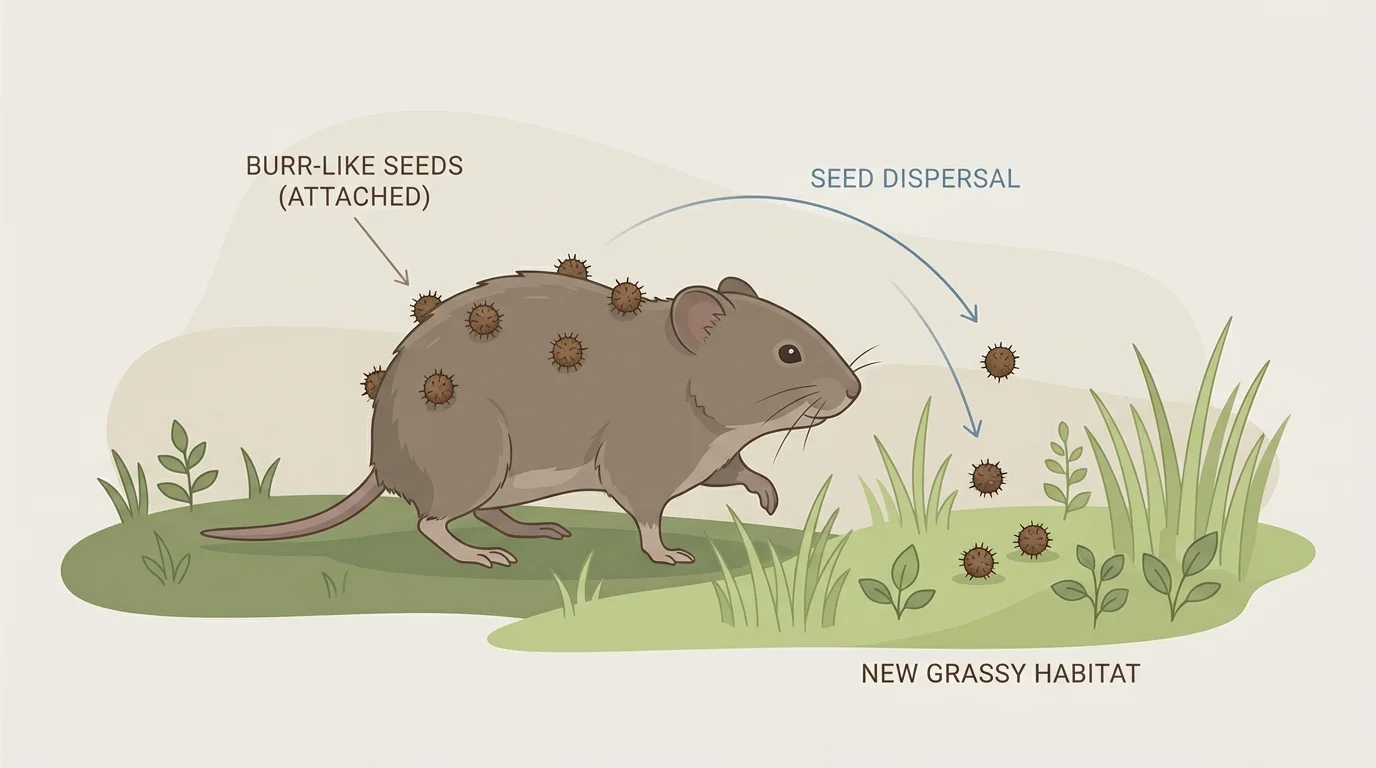
When we make a model for this topic, we use evidence from living things. We look at what an animal does and what body parts help it do that job. Then we build a simple object or tool that copies one important part of the job, as [Figure 1] shows for seed movement.
Some animals help plants by moving seeds to new places. This is called seed dispersal. Seeds can catch on fur and travel away from the parent plant. A seed that moves to a new place may have room, water, sunlight, and soil to grow.
One example is a burr. A burr is a seed case with tiny hooks. When it brushes against an animal's fur, it sticks. Later, the seed falls off in a different place. That means the animal helped the plant without even trying.
Other animals help plants by moving pollen. Pollen is a fine powder made by flowers. When a bee or butterfly visits one flower and then another, some pollen moves too. This helps plants make seeds. This transfer of pollen is called pollination.
A bee's fuzzy body is good at picking up pollen. As the bee drinks nectar, pollen sticks to the fuzz. Then the bee flies to another flower, and some pollen rubs off. The plant gets the help it needs to make new seeds.
Some human-made ideas come from careful watching in nature. A tiny seed hook on a plant can inspire a useful tool people use every day.
Animals and plants are part of an ecosystem. In an ecosystem, living things interact with one another. A plant gives food to an animal, and the animal may help the plant spread seeds or pollen.
Scientists do not guess wildly. They look for evidence. Evidence can come from seeing, touching, comparing, and noticing patterns. If we want to make a model of a seed-moving animal, we ask, "What part of the animal helps the seed move?"
If a burr sticks to fur, the evidence tells us that something soft and fuzzy might work in our model. If pollen sticks to a bee, the evidence tells us that something fluffy or dusty might be important. We choose model parts because they match what we observed.
How evidence guides a model
A good simple model does not need every detail. It needs the details that matter most for the job. If the job is carrying seeds, the model should show sticking and moving. If the job is moving pollen, the model should show picking up and dropping off pollen.
We can also compare features of real animals and simple tools, as [Figure 2] later shows for a pollination model.
| Real animal feature | What it does | Possible model part |
|---|---|---|
| Fur | Seeds can stick to it | Mitten, felt, or fuzzy fabric |
| Fuzzy bee body | Pollen sticks to it | Cotton ball or pom-pom |
| Animal movement | Carries seeds or pollen to a new place | Hand moving the model |
Table 1. Examples of how real animal features can be represented in a simple model.
Looking back at [Figure 1], we can see why a fuzzy material makes sense in a seed model. The important evidence is not the animal's name. The important evidence is that the seed sticks, travels, and drops somewhere new.
A simple model can be an object or tool you can hold. For pollination, a tool can copy the job of a bee. A cotton ball on a craft stick can act like a fuzzy bee body. When it touches one flower, some pollen can stick to it. When it touches another flower, some pollen can move there.
For seed dispersal, a mitten or piece of felt can copy animal fur. If paper "seeds" have tiny hook-like pieces, they can stick to the fuzzy surface. Then the mitten can move to a new place, and the seeds can fall off. That model shows the job clearly.
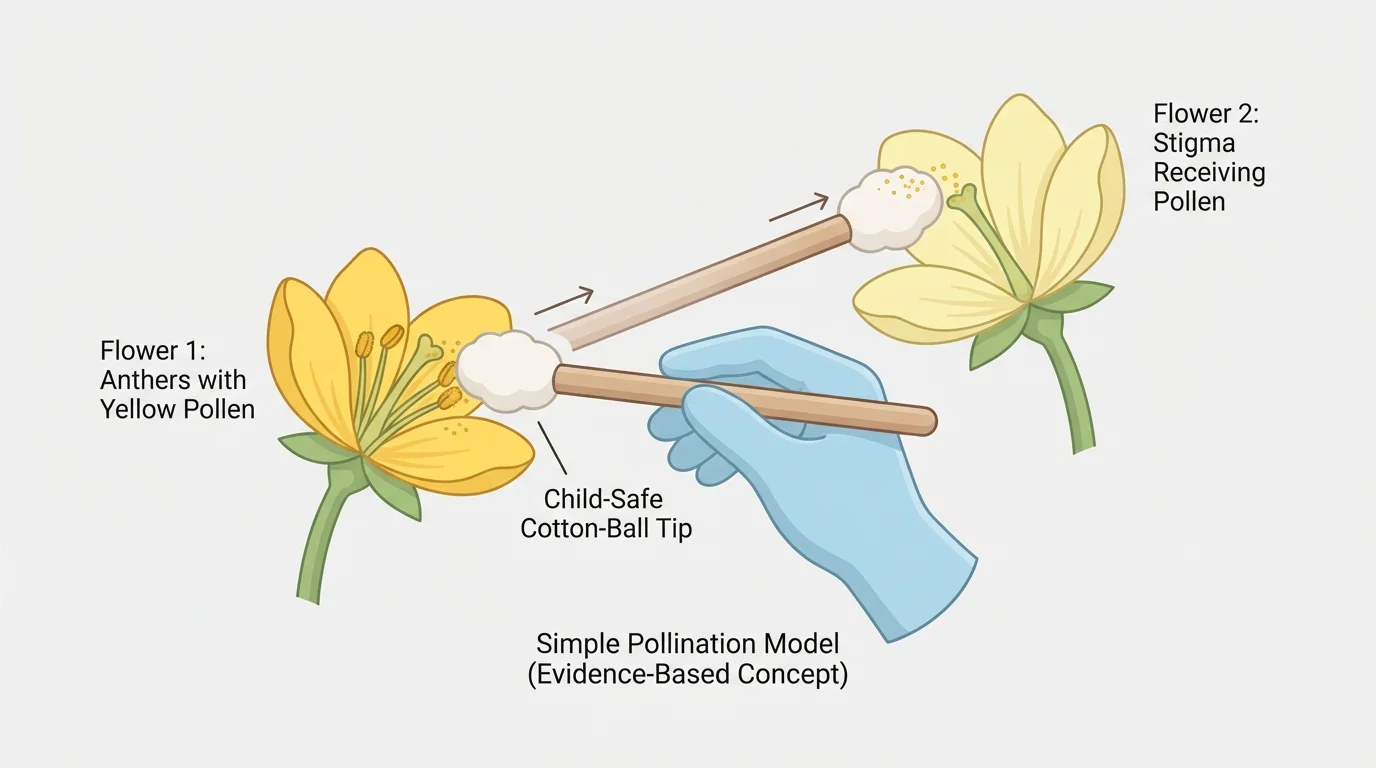
Example: matching a model to a bee
Step 1: Look at the evidence.
A bee has a fuzzy body, visits flowers, and carries pollen.
Step 2: Pick the most important job.
The job is moving pollen from one flower to another.
Step 3: Choose model parts.
A cotton ball can stand for fuzz, and a stick can help move it from flower to flower.
Step 4: Explain the match.
The cotton ball picks up and drops off pollen the way a bee's fuzzy body does.
A model can mimic an action or function when it copies what something does. Our model does not buzz or fly like a bee, but it mimics the part that matters most here: moving pollen.
Simple models are useful because they help us focus on one main idea. We do not need wings, legs, or eyes if those parts do not help explain the plant job we are studying.
After making a model, we ask good science questions. Does it show how the animal helps the plant? Does it match the evidence? Does it copy the important function, not just the way the animal looks?
A strong model for seed dispersal shows three ideas: a seed sticks, a seed travels, and a seed lands somewhere else. A strong model for pollination shows that pollen can be picked up and then placed on another flower.
Plants need help to make more plants. Seeds can grow into new plants, and pollen helps many flowers make seeds.
Sometimes a model leaves out details. That is okay. A model is supposed to be simple. It should include enough to explain the main function. The cotton-ball pollinator model is useful because it shows transfer, even though it is not alive.
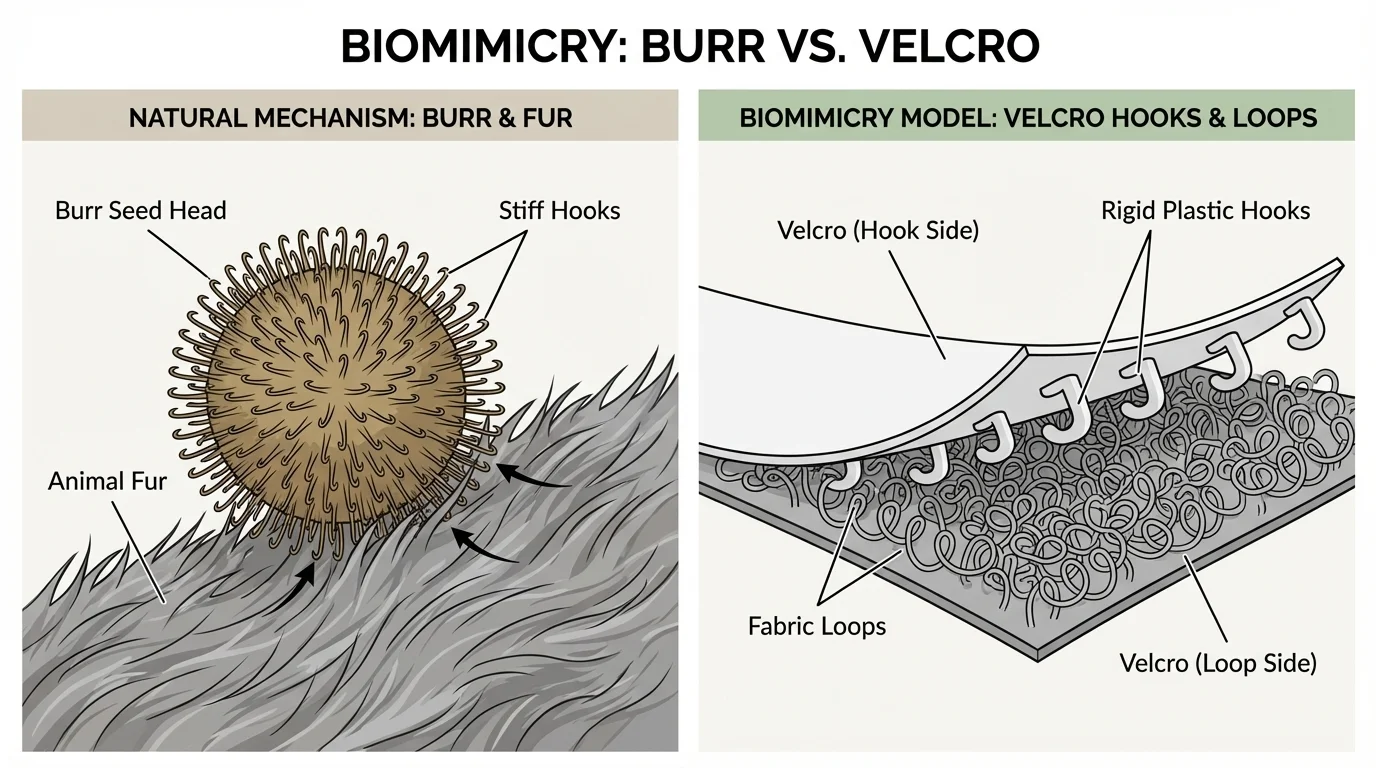
Scientists often improve models. If a model does not work well, they look again at the evidence and change a part. That helps the model match the real-world job better, and [Figure 3] shows a later example of a nature-inspired design.
People often watch nature and design tools that copy natural patterns. One famous example uses burrs. Burrs have tiny hooks that catch on fur. This inspired Velcro, which has little hooks and loops that stick together.
Farmers and gardeners may also move pollen by hand when they need to help flowers. A small brush can act like a pollinating animal by picking up pollen and moving it. This is a real-world use of a simple model-based idea from nature.
Real-world connection
A person making a garden tool might ask, "What does the animal do that I need the tool to do?" If the answer is "pick up pollen gently," then a soft brush is a better choice than a hard plastic point. The evidence from bees helps guide the design.
Nature-inspired tools show that science is not only about knowing facts. It is also about noticing patterns, using evidence, and building things that solve problems. The burr idea reminds us that careful observation can lead to useful inventions.
When we develop a simple model based on evidence, we are doing important science work. We observe carefully, choose parts for a reason, and explain how our object or tool matches the job done by an animal.
