Your body likes patterns. When you do healthy things again and again, your body learns, "This is how we rest, get clean, and grow strong." Small choices every day can help you feel calm at bedtime, fresh in the morning, and ready for play, learning, and family time.
A habit is something you do often. Good habits help your body and brain work well. Healthy habits can help you sleep, stay clean, and eat foods that give you energy.
Sleep is the time your body rests. Hygiene means keeping your body clean. Healthy eating means choosing foods and drinks that help your body grow and stay strong.
When healthy habits are well established, you may wake up happier, have more energy, and get sick less often. When healthy habits are skipped, you may feel tired, messy, grumpy, or hungry too soon.
[Figure 1] Your body rests best when bedtime feels calm and steady. A routine means doing the same steps in the same order. A bedtime routine can help your body know, "It is time to sleep now."
Good sleep habits include going to bed at about the same time each night, putting on pajamas, brushing your teeth, listening to a quiet story, and turning off bright screens before bed. A dark, quiet, cozy room can help too.
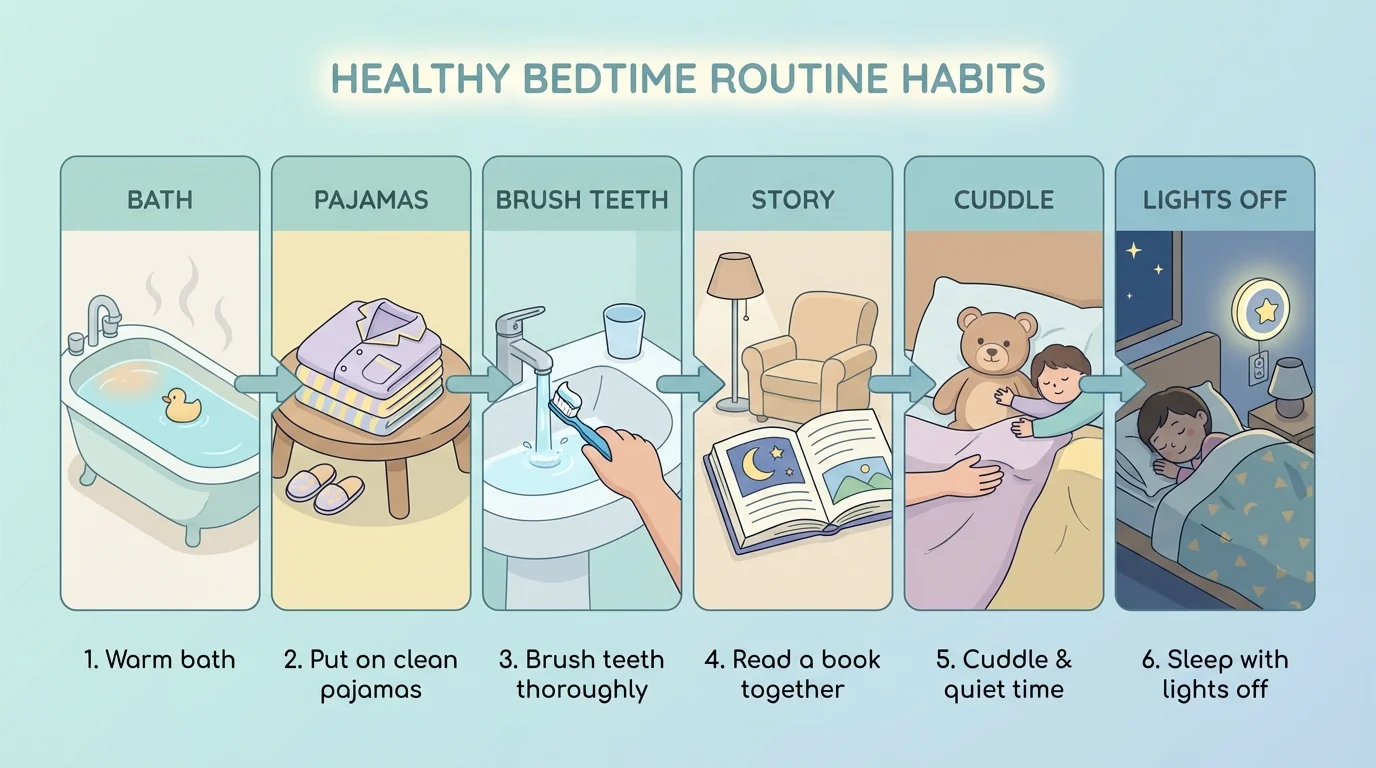
This shows one example of a bedtime routine. If your body feels restless, try slow breaths, a soft blanket, or quiet music with an adult's help. If you feel scared, thirsty, or uncomfortable, tell a trusted adult. Asking for help is a healthy habit too.
Bedtime example
You want bedtime to feel easier.
Step 1: Put toys away.
Step 2: Wash up and put on pajamas.
Step 3: Brush teeth.
Step 4: Read one quiet story.
Step 5: Lights low, body still, eyes closed.
Doing these steps every night helps sleep come more easily.
Later, if bedtime feels hard, look back at the order in [Figure 1]. The same calm steps help your body remember what comes next.
[Figure 2] Hygiene keeps your body clean and helps stop germs from spreading. One of the most important hygiene habits is washing hands the right way.
Wash your hands with soap and water after using the toilet, after coughing or sneezing, before eating, and after playing outside or touching messy things. Rub the fronts of your hands, the backs, between fingers, then rinse and dry.
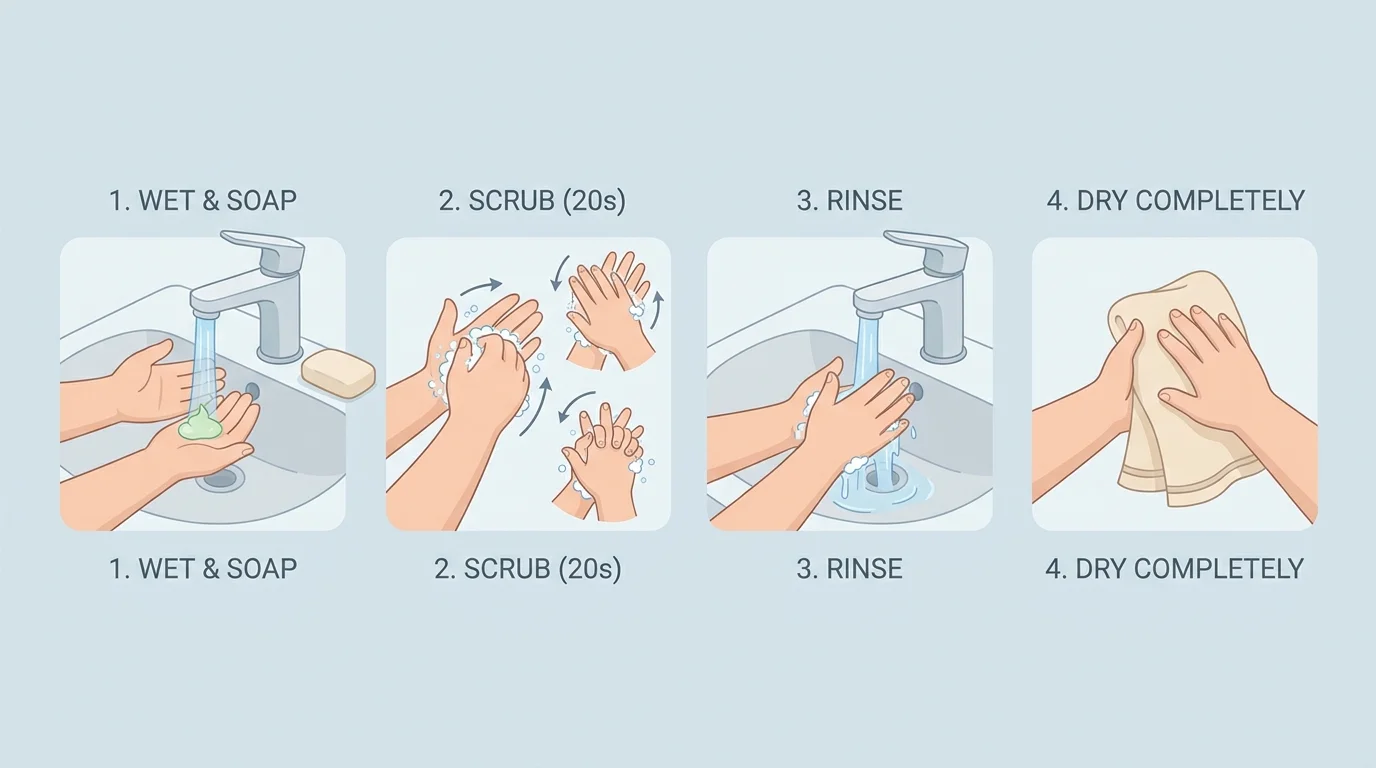
This shows the basic steps of handwashing. Other clean-body habits matter too. Brush your teeth in the morning and before bed. Take baths or showers when needed. Put on clean clothes and keep your nails tidy.
Your mouth needs cleaning every day because tiny bits of food can stay on teeth. Brushing helps keep teeth strong and your breath fresh.
When you cough or sneeze, cover with your elbow or a tissue. Then wash your hands. That helps protect you and the people around you at home, during social activities, or in the community.
The handwashing steps in [Figure 2] are useful when your hands look dirty and also when they do not. Germs can be too small to see, so clean hands matter even when they look fine.
[Figure 3] Healthy eating means giving your body many kinds of foods and drinks that help it grow. A healthy meal can include colorful foods from different groups.
Healthy eating habits include eating meals and snacks at regular times, drinking water when you are thirsty, and trying a variety of foods. Fruits, vegetables, grains, and proteins all help your body in different ways.
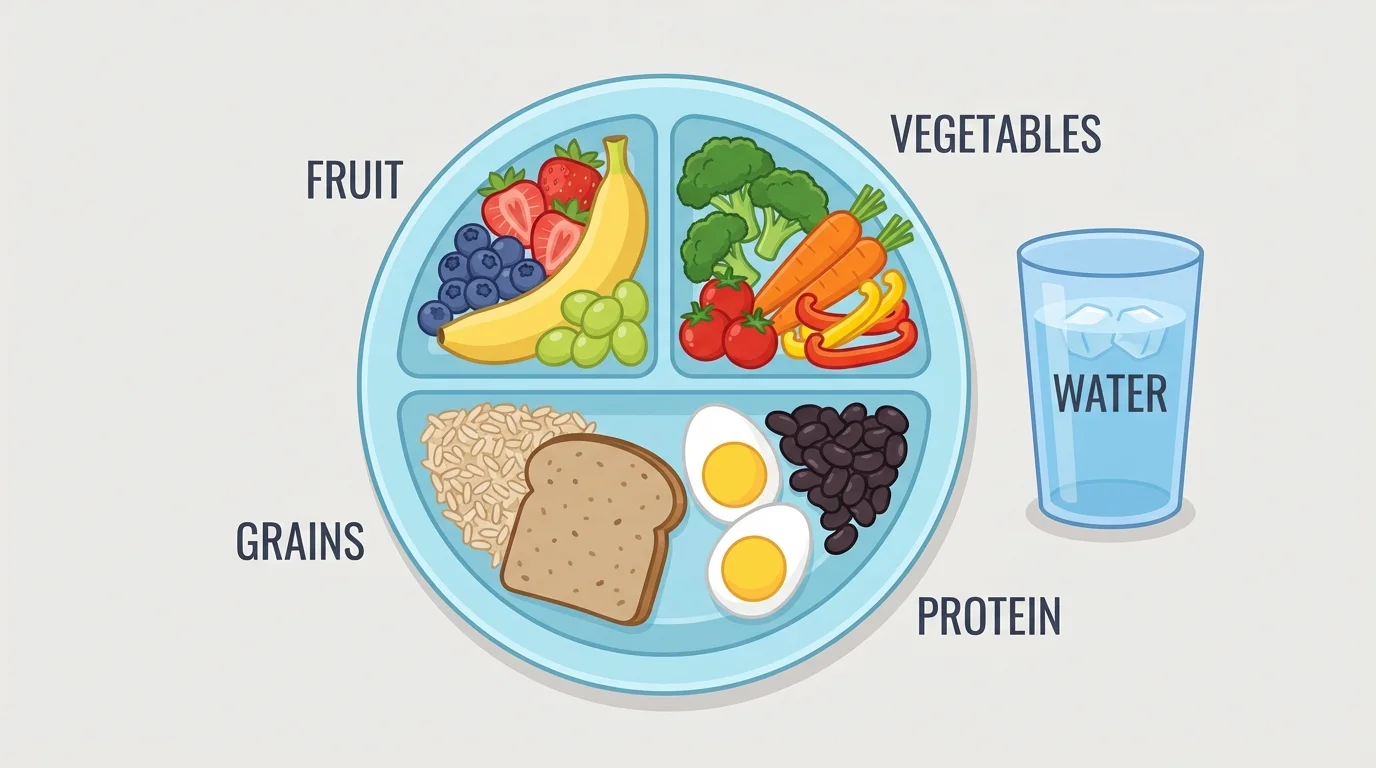
This shows one example of a balanced plate. Sometimes you may not like a new food the first time. That is okay. You can take a small taste and try again another day. Learning to eat many foods helps your body get what it needs.
Eating to help your body
Food gives your body energy to move, think, and grow. Water helps your body stay comfortable. Eating too many sugary snacks and drinks can leave you hungry again fast, but balanced meals help you stay full longer.
It also helps to notice your body. When you are hungry, your tummy may feel empty. When you are full, your body may tell you it has had enough. A trusted adult can help you learn when it is time for meals, snacks, and water.
The plate in [Figure 3] reminds you that healthy eating is not just one food. It is a mix of foods that work together to help your body.
Healthy habits work best when you practice them every day. In the morning, you can wash your face, brush your teeth, get dressed, and eat breakfast. During the day, you can wash your hands before eating and drink water. At night, you can clean up, brush your teeth again, and follow your bedtime routine.
| Time of day | Helpful habit | Why it helps |
|---|---|---|
| Morning | Brush teeth and eat breakfast | Starts the day clean and fueled |
| Before meals | Wash hands | Helps keep germs away |
| Snack or meal time | Choose water and healthy foods | Helps your body grow strong |
| Bedtime | Follow a calm routine | Helps your body rest |
Table 1. Daily habits that support sleep, hygiene, and healthy eating.
Here is a simple real-life picture. If you stay up too late, skip tooth brushing, and eat only sweets, the next day may feel hard. You may be tired, your mouth may feel unclean, and you may feel hungry again quickly. But if you sleep well, get clean, and eat balanced meals, your body is more ready for the day.
Try This
Pick one small habit to practice today.
Step 1: Choose one: wash hands before eating, drink water with a meal, or follow your bedtime steps.
Step 2: Do it with a trusted adult if you need help.
Step 3: Notice how your body feels after you practice it.
Small healthy choices can grow into strong habits.
You do not have to do everything perfectly. You are learning. Each time you wash, eat well, or get ready for sleep, you are taking care of your body in an important way.
