Your body does important work every day. It helps you run, play, learn online, sleep, and grow. But your body also needs your help. Small habits like washing your hands, brushing your teeth, and getting enough sleep can make a big difference. When you use safe routines, you protect yourself and the people around you.
Germs are tiny living things that can make people sick. You cannot usually see them, but they can get on your hands, toys, doorknobs, tablets, and tissues. The good news is that safe routines help stop germs from spreading. These routines also help your body feel clean, calm, and ready for the day.
If you forget healthy habits, problems can happen. Dirty hands can spread coughs and stomach illnesses. Skipping toothbrushing can hurt your teeth. Going to bed too late can leave you irritable and tired. Good habits are like helpers that work every day.
Hygiene means keeping your body and things around you clean to stay healthy. Routine means something you do again and again in the same safe way.
When you have a routine, you do not have to guess what comes next. You already know: wash, brush, rest, drink water, and tell an adult when something feels wrong.
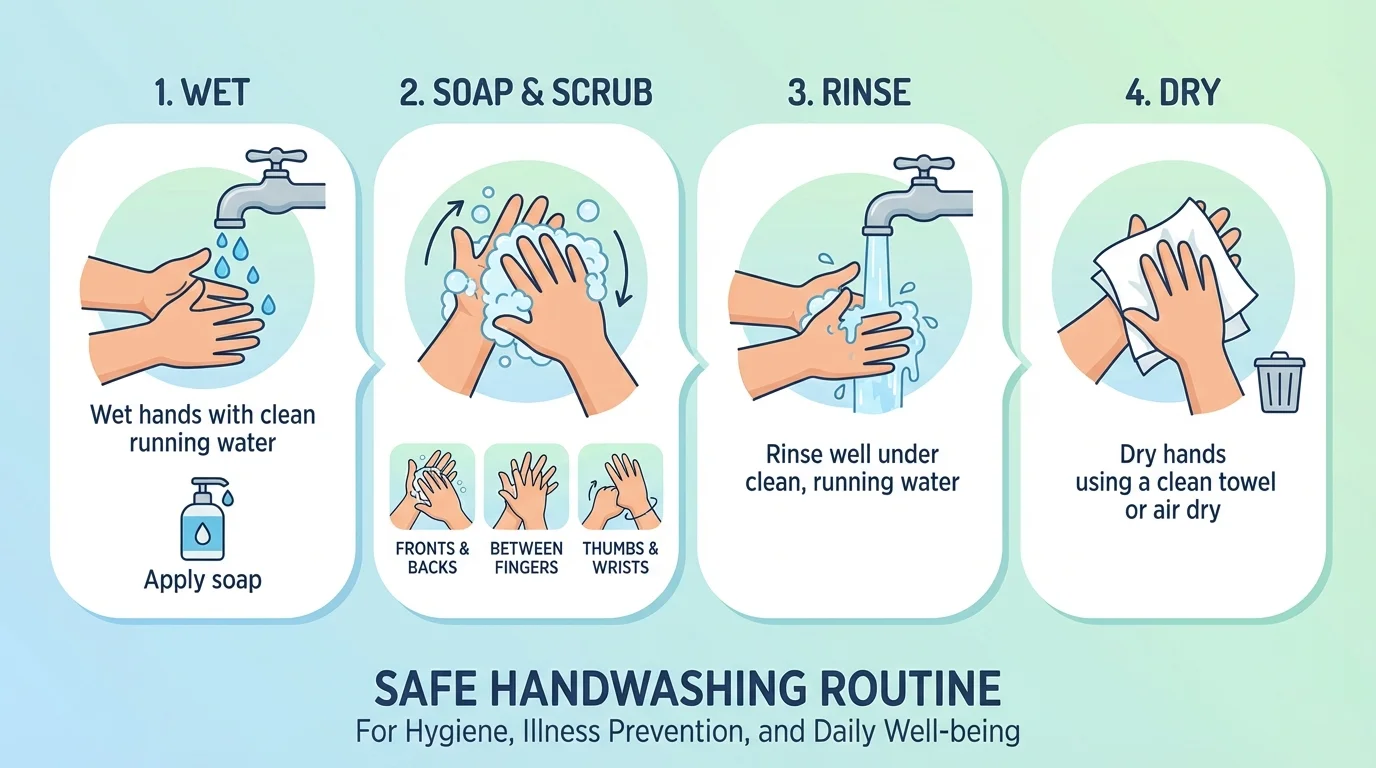
[Figure 1] One of the best ways to stay healthy is washing your hands. Proper handwashing has steps that are easy to remember. Wash your hands before eating, after using the bathroom, after coughing or sneezing, after touching pets, after playing outside, and when your hands look dirty.
Step 1: Wet your hands with water. Step 2: Apply soap. Step 3: Scrub your hands well, including the fronts, backs, between fingers, and under nails. Step 4: Rinse the soap off. Step 5: Dry your hands with a clean towel or let them air-dry.
Your mouth needs care too. Brush your teeth in the morning and before bed. Use a toothbrush and toothpaste, and ask a trusted adult to help you if needed. Clean teeth help stop pain and keep your smile healthy.
A clean body also means taking baths or showers, washing your face, and wearing clean clothes. If your shirt is sweaty or dirty, change it. If you used a tissue, throw it away after one use. If you cough or sneeze, cover your mouth and nose with a tissue or your elbow. That helps stop droplets from spreading to other people during family time and community activities.
Washing every part of your hands matters. A quick splash of water is not enough. Soap and scrubbing help lift dirt and germs away.
Your hands touch many things each day, such as door handles, screens, toys, and food. That is why clean hands are one of the strongest healthy habits you can build.
Do not share things that go in or on your body, like toothbrushes, cups, water bottles, lip balm, or eating forks. Sharing those items can spread germs more easily.
[Figure 2] Your body gives clues when something is wrong and can help you follow a simple path. You might have a cough, a runny nose, a fever, a sore throat, a headache, or a tummy ache. If you feel sick, do not hide it. Tell a trusted adult right away.
After you tell an adult, your safe routine is simple. Rest your body. Drink water. Use tissues if your nose is runny. Cover coughs and sneezes. Stay away from close contact with others until the adult tells you what to do next. If medicine is needed, only a trusted adult should give it to you. Never take medicine by yourself unless an adult says it is okay.
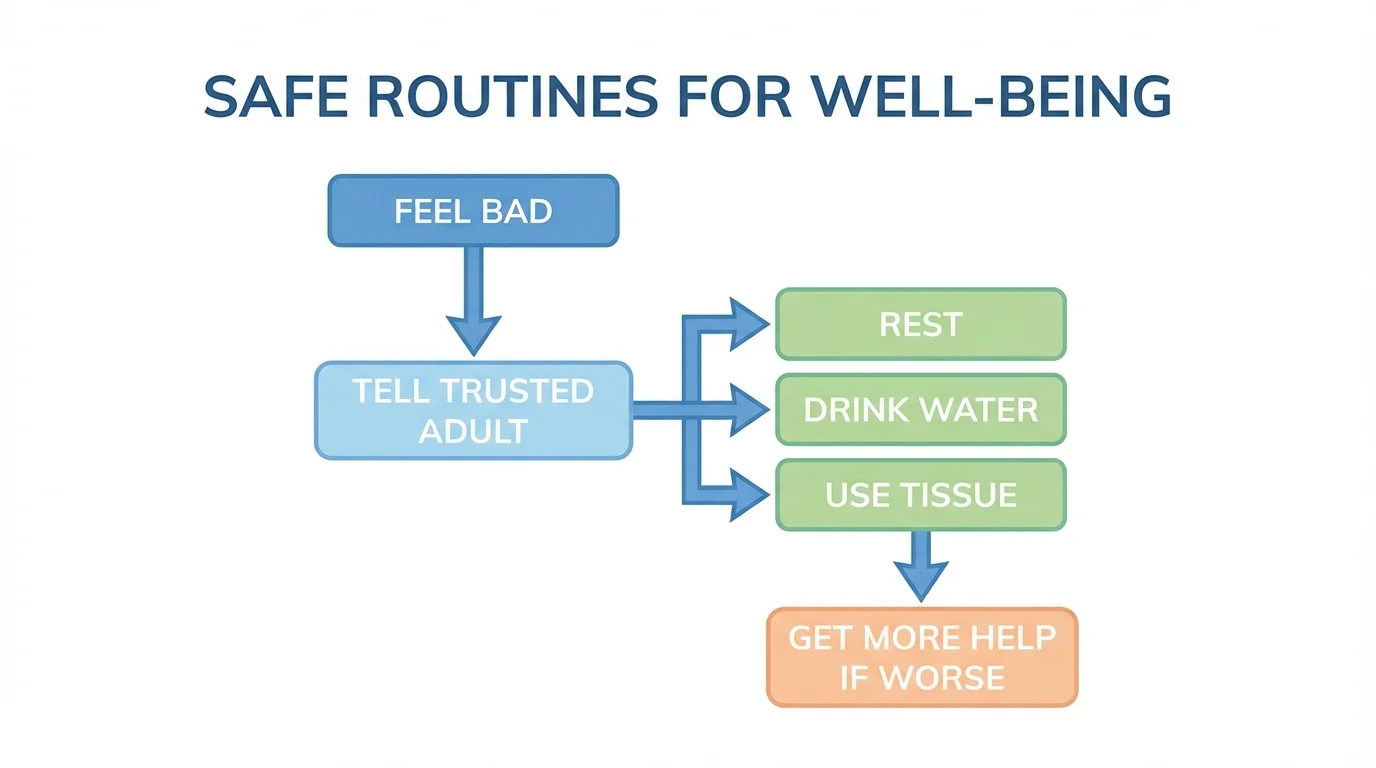
Sometimes you may need extra help quickly. If you have trouble breathing, feel very weak, are difficult to wake, or are in strong pain, an adult should get medical help right away. You do not need to decide this alone. Your job is to speak up.
Example: You wake up with a sore throat
Step 1: Tell a trusted adult, "My throat hurts."
Step 2: Rest and drink water.
Step 3: Use tissues and wash your hands after blowing your nose.
Step 4: Follow the adult's directions about staying home from activities or getting care.
This is a safe way to take care of yourself and protect other people too.
Later, when you think about your sick-day choices, remember the order: notice, tell, rest, drink, and get help if things get worse.
Staying well is not only about soap and tissues. Your body also needs sleep, water, healthy food, movement, and quiet time. These habits help your body fight sickness and help your brain feel ready to learn.
Sleep is an important part of staying healthy. When you sleep, your body rests and grows. A bedtime routine can include putting away screens, brushing teeth, using the bathroom, and lying down at a calm time each night.
Hydration means your body gets enough water. Drink water during the day, especially after active play or when it is hot outside. Healthy foods like fruits, vegetables, grains, and proteins help your body stay strong. Moving your body by stretching, dancing, walking, or playing outside also helps.
Healthy habits work together. Clean hands help block germs. Sleep helps your body recover. Water helps your body work well. Good food gives energy. Movement keeps muscles and the heart strong. When you do these habits together, your whole body gets support.
Your feelings matter too. If you feel upset, take slow breaths, hug a pillow, sit quietly, or talk to a trusted adult. Calm-down routines are part of daily well-being because your mind and body are connected.
Even when you learn from home, health habits still matter. Before snack time during online lessons, wash your hands. After coughing, mute your microphone if needed, cover your cough, use a tissue, and clean up. If you feel too sick to focus, tell your adult so they can help you rest.
Be careful with items around the house. Do not touch medicine bottles, cleaning sprays, or sharp tools unless an adult says it is safe. Wash cuts with help from an adult and keep bandages clean and dry. If you touch something messy, sticky, or dirty, wash your hands.
You already know how to ask for help from a trusted adult. Health and safety routines use that same skill: if you are unsure, stop and ask.
Safe routines are not about being scared. They are about knowing what to do. When you know the steps, you can act calmly and quickly.
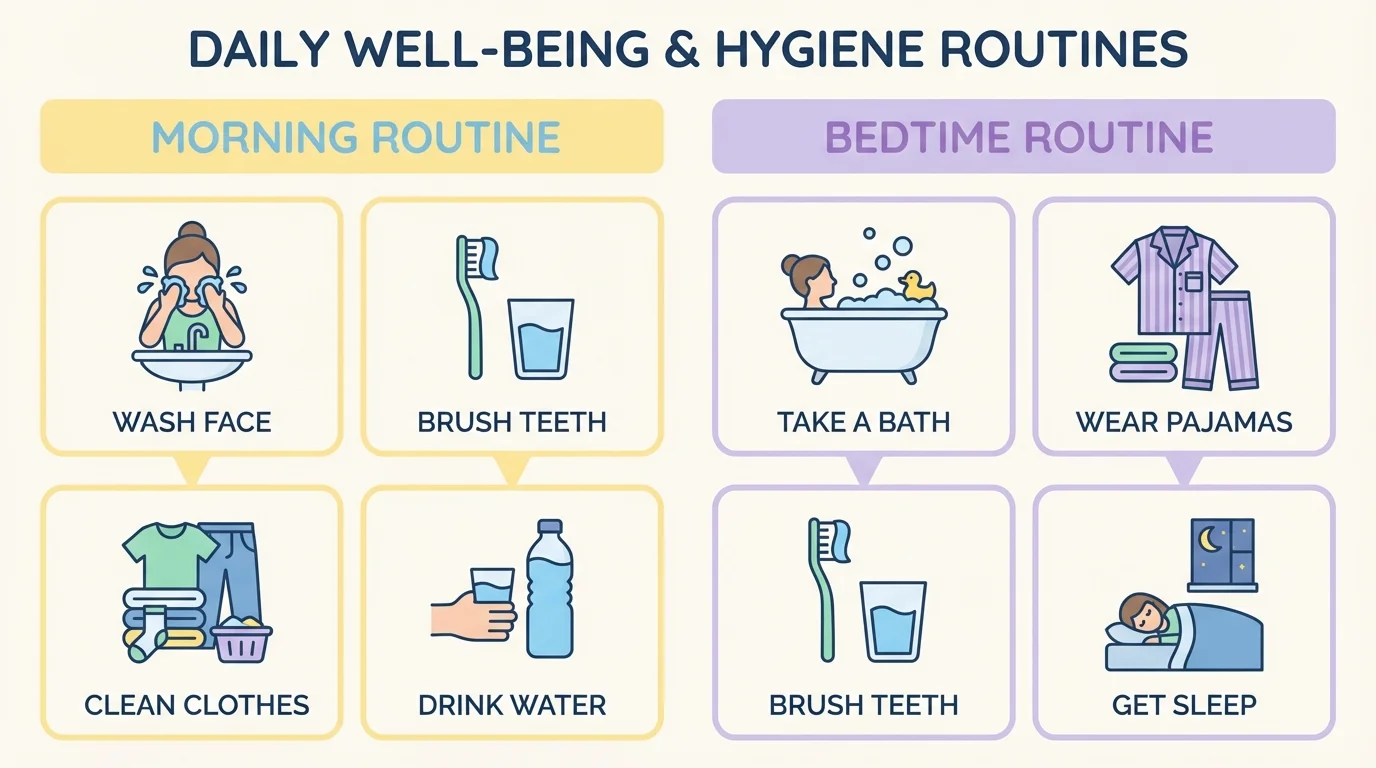
[Figure 3] A daily routine repeats in a helpful way and can work like a checklist for morning and bedtime habits. Routines help because you do healthy things before there is a problem.
A morning routine might be: use the bathroom, wash hands, wash face, brush teeth, put on clean clothes, eat breakfast, and drink water. An evening routine might be: bath or wash-up, put on clean pajamas, brush teeth, drink some water if needed, and go to bed on time.
Here is a simple comparison of helpful choices.
| Healthy choice | What it helps with |
|---|---|
| Wash hands with soap | Stops many germs from spreading |
| Brush teeth morning and night | Keeps teeth and gums healthier |
| Tell an adult when you feel sick | Helps you get the right care fast |
| Drink water and sleep well | Helps your body work and rest |
| Do not share toothbrushes or drinks | Lowers the chance of spreading germs |
Table 1. Daily choices and how they support health and safety.
If you skip these routines often, little problems can turn into bigger ones. If you keep them going, they become easy habits. That is the value of a routine. Repeating small safe steps each day helps you stay clean, prevent illness, and feel your best.
"Small healthy habits, done every day, make a big difference."
You do not have to be perfect. You just have to keep practicing the safe steps that help your body and your home stay well.
