Have you ever helped choose a game, picked up trash, or shared an idea to make your class better? Those small actions are important. They are part of helping a group work together. When people help make their school, neighborhood, or town better, they are taking part in civic life.
A community is a group of people who live, learn, or work together. Your home, your class, your school, and your neighborhood are all communities, as [Figure 1] shows. In each community, people care for one another and share spaces, rules, and activities.
Communities can be big or small. A class is a small community. A town is a bigger community. People in communities often help by listening, sharing, taking turns, and solving problems together.
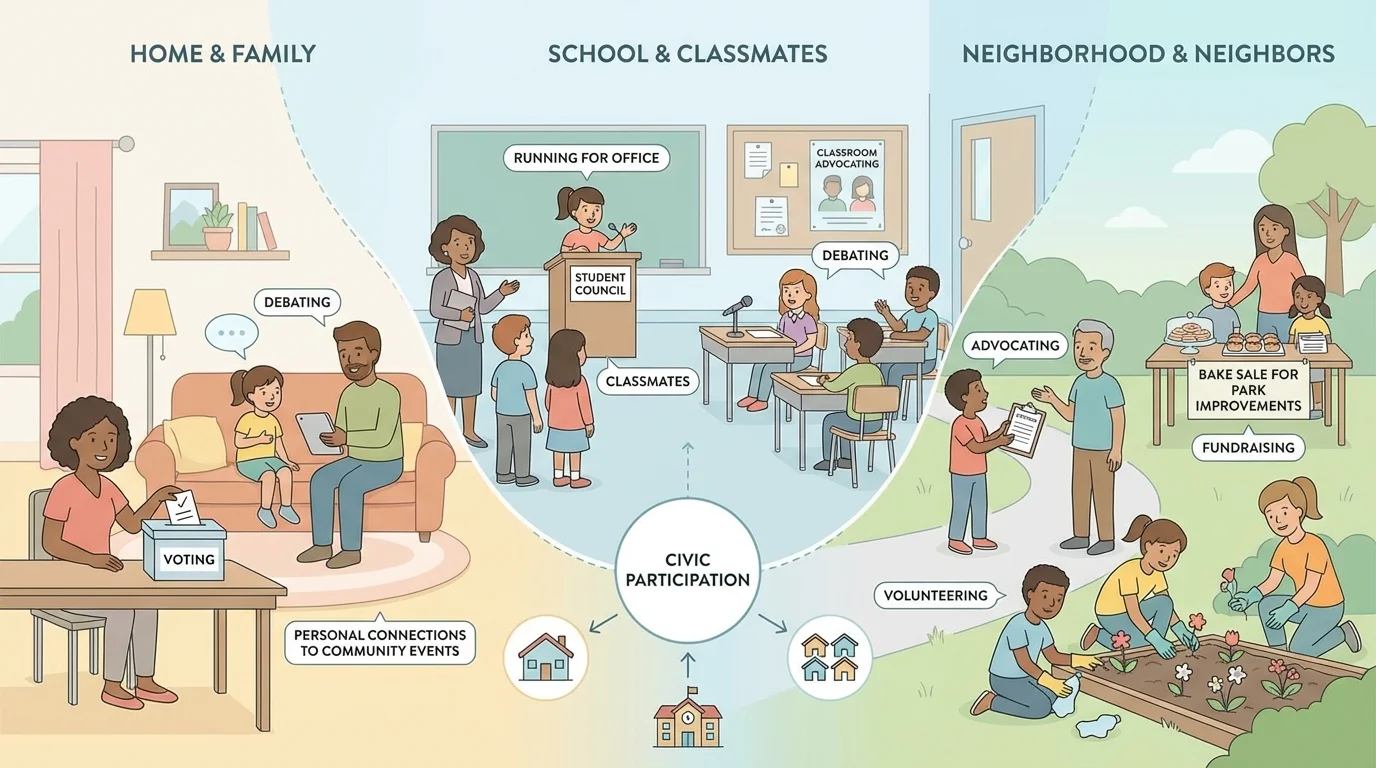
Community is a group of people who live, learn, or work together.
Civic participation means joining in to help a community make choices or solve problems.
When people join in, they show they care. Some people speak. Some people vote. Some people give time. Some people raise money. These are all different ways to help.
Civic participation means doing something to help a group, a school, a neighborhood, or a town. It is not just one action. It can be many actions. A person might share an idea at a meeting, help collect food for families, or clean a park.
This happens across many groups. Families make choices together. Classes vote on activities. Schools collect supplies. Neighborhoods hold events. Towns have leaders. All of these groups need people to join in and help.
Many groups, many ways to help
People participate in civic life in different places. They may help at home, in school, in a club, in a place of worship, or in a town event. The action may look different in each group, but the goal is similar: to care for others and improve the community.
Children can notice civic participation all around them. A parent who votes, a teacher leading a class discussion, or neighbors collecting coats are all examples of people taking part in community life.
People can help in many ways, and [Figure 2] illustrates several of them. These ways are not all the same. Each kind of participation has its own job in a community.
Voting means choosing between ideas or people. Adults may vote in an election. Children may vote on a class book or snack. Voting helps a group make a choice together.
Debating means talking about different ideas and giving reasons. In a class, one child may say, "Let's read outside because it is sunny," and another may say, "Let's stay inside because it is quiet." Both are sharing reasons. Debating is about listening and thinking.
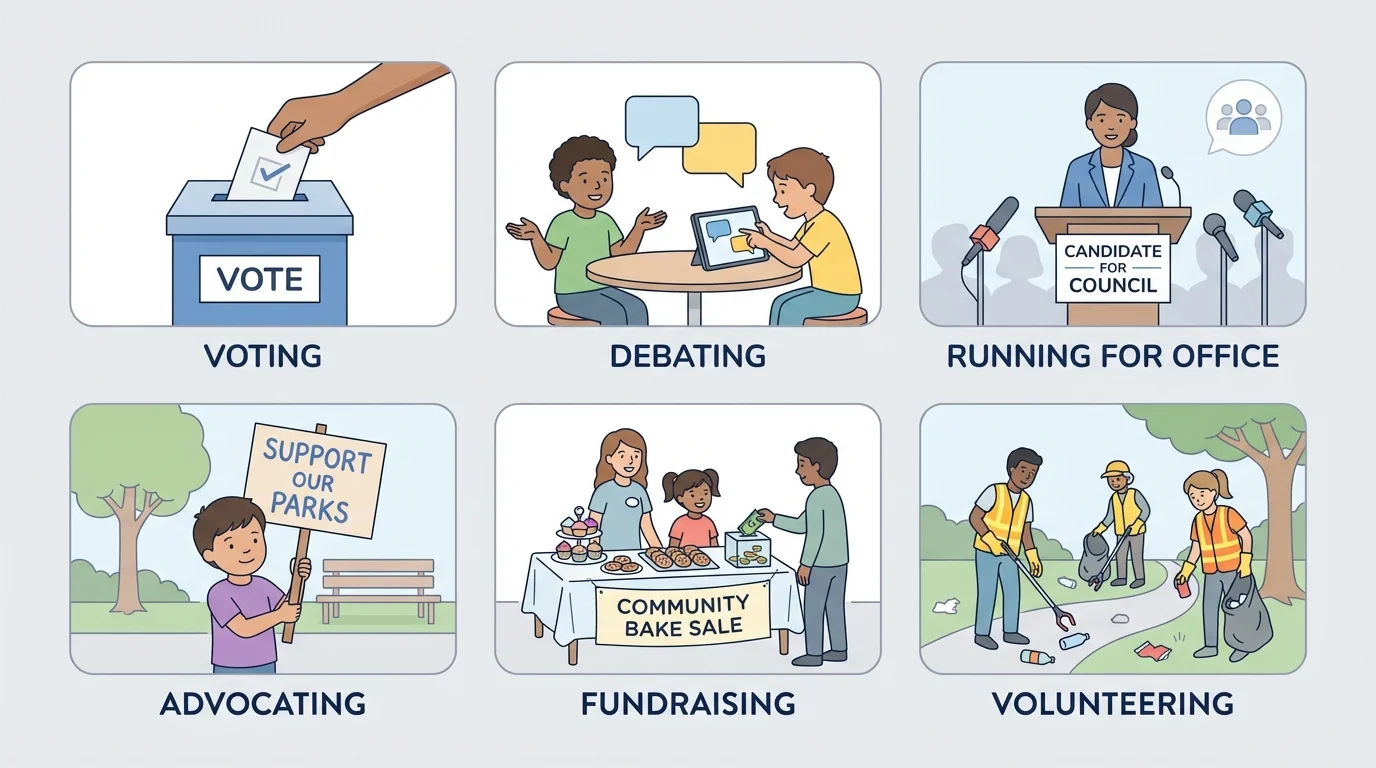
Running for office means asking people to choose you as a leader. A grown-up might run for mayor. A child might run for class helper or line leader. Someone who runs for office wants to take responsibility and help make decisions.
Advocating means speaking up for something important. A person might say, "We need safer sidewalks," or "Let's help animals at the shelter." Advocating is using your voice to support a good cause.
Fundraising means collecting money or items to help others. A school might raise money for books or collect canned food for families. Fundraising helps a community share what it has.
Volunteering means giving time and effort to help without being paid. A volunteer may plant flowers, read to younger children, or help set up chairs for an event. Volunteering is a gift of time and care.
| Way to participate | What it means | Simple example |
|---|---|---|
| Voting | Choosing with others | Class votes for a story |
| Debating | Sharing reasons about ideas | Children discuss where to have circle time |
| Running for office | Trying to become a leader | A student asks to be class helper |
| Advocating | Speaking up for a cause | A child asks for more playground trees |
| Fundraising | Gathering money or items to help | Collecting food for families |
| Volunteering | Giving time to help | Helping clean the school garden |
Table 1. Different examples of civic participation and simple child-friendly examples.
Even very young children can practice civic habits. Listening, taking turns, helping others, and sharing ideas are early ways to be a good community member.
These actions are different, but they all relate to caring for a group. As seen in [Figure 2], some kinds of participation use a voice, some use choices, and some use time or effort.
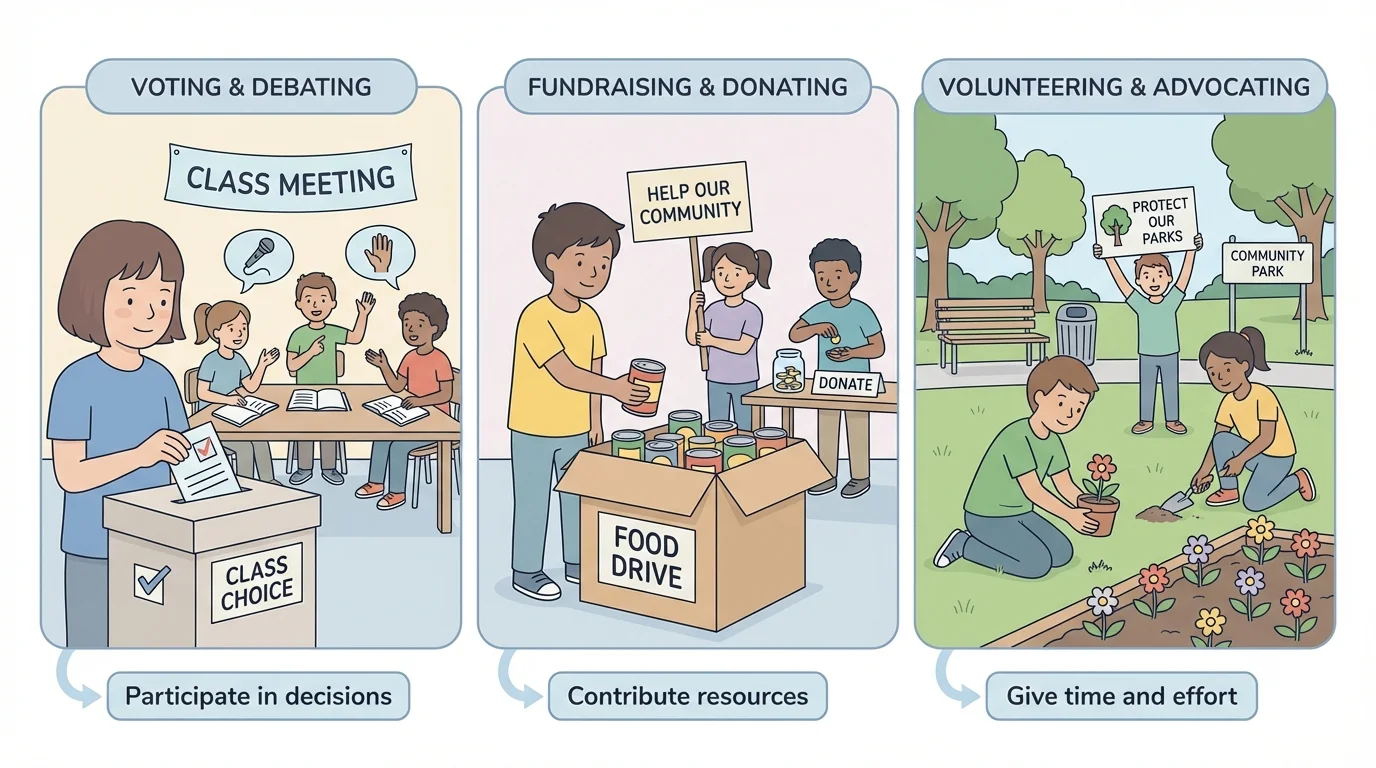
[Figure 3] shows some ways children can join community life in real school and neighborhood situations. You may not be old enough to vote in a town election, but you can still participate by helping, speaking kindly, and sharing ideas.
At school, children can vote on a class activity, help make rules, or talk about what would make the classroom better. At home, children can help make family choices, such as picking a meal or choosing a game fairly. In the neighborhood, children can bring food for a collection drive or help in a park cleanup.
Community event examples
Step 1: A child puts a paper in a class choice box.
This is like voting because the child is helping the group make a decision.
Step 2: Two children explain different ideas for a class party.
This is like debating because they are sharing reasons and listening to each other.
Step 3: A child helps collect canned food for families.
This is like fundraising or helping with a collection drive because the child is gathering support for others.
Step 4: A family plants flowers in a public space.
This is volunteering because they are giving time to help the community.
Sometimes children also advocate. For example, a child might tell the principal, "Our playground needs more shade." That child is respectfully speaking up for something that would help others.
Communities need many kinds of helpers. One person may be best at speaking. Another may be best at organizing. Another may quietly help by cleaning or carrying supplies. All of these actions matter.
Voting helps a group choose. Debating helps a group think. Running for office helps a group find leaders. Advocating helps a group notice needs. Fundraising helps a group gather support. Volunteering helps a group get work done. Looking back at [Figure 1], we can remember that every group in a child's world needs care and teamwork.
When people participate, they build stronger communities. They learn to listen, be responsible, and work with others. These habits start early. A kind voice, a helpful hand, and a fair choice can all make a difference.
"We can all help our community."
Being part of a community means more than belonging. It means joining in. Whether someone votes, speaks up, leads, gives, or volunteers, that person is helping others.
