Have you ever noticed how a house, a road, a playground, and a garden can all be in the same place? People build and use many things so they can be safe, warm, dry, and comfortable, and [Figure 1] shows how these helpful things can also change the land around them. A home gives shelter. A road helps cars and buses move. Lights help us see at night. Water pipes bring us clean water. These are important parts of daily life.
But when people build, drive, throw things away, or use lots of water and energy, they can affect the ground, rivers, air, and animals nearby. Cutting down too many trees changes the land. Litter can dirty water. Smoke from cars can make the air less clean. Loud places can bother birds and other animals.
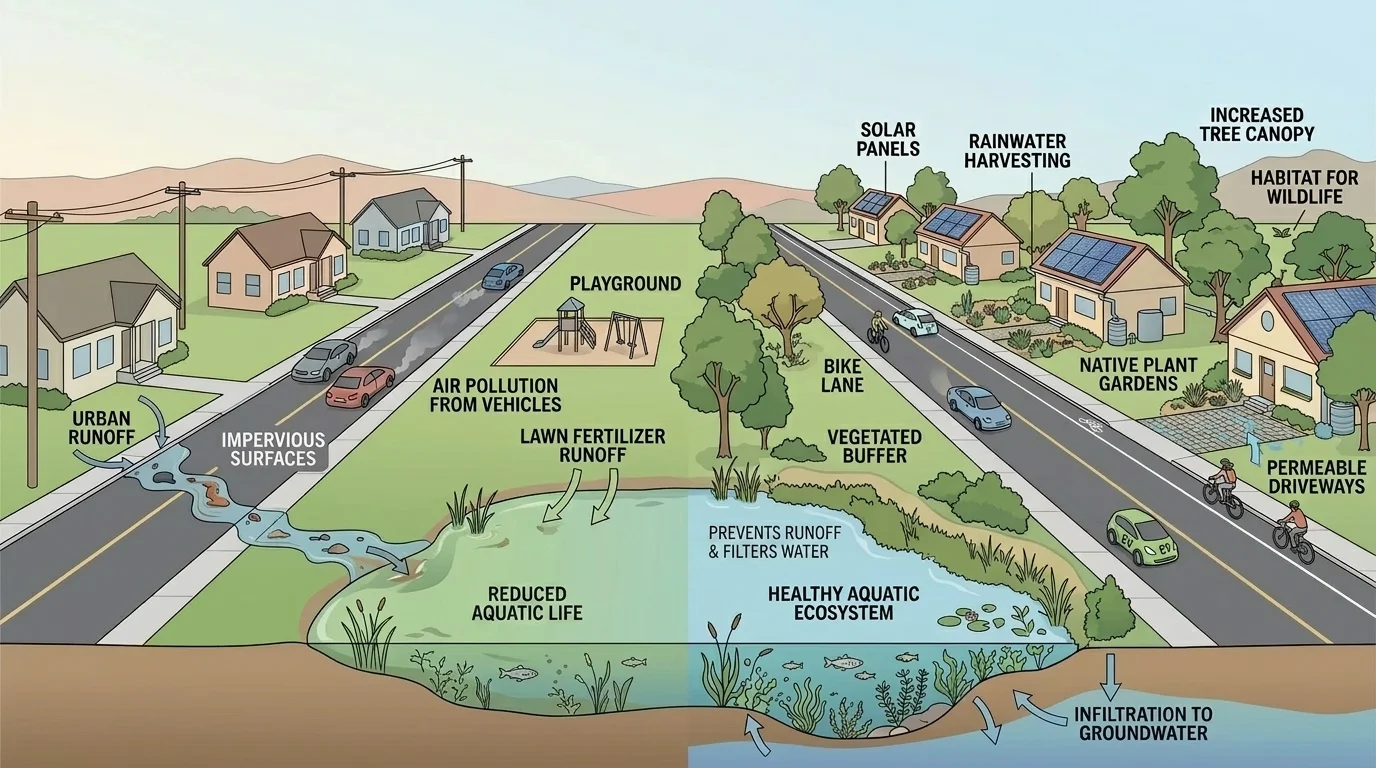
People make changes because they need places to live, learn, travel, and play. We build houses to stay warm and dry. We make roads so cars and buses can move safely. We grow food on farms so people can eat. These changes help people live more comfortably.
Sometimes these changes help in one way but cause a problem in another way. A parking lot gives cars a place to stop, but it covers soil and grass. A big building gives people room, but it may replace a place where insects, birds, or rabbits once lived. Comfort is important, and caring for Earth is important too.
Environment means the land, water, air, and living things around us.
Impact means a change or effect. People can have helpful impacts and harmful impacts.
People can make choices that lower harmful impacts. They can build parks, plant trees, use less water, and put trash where it belongs. They can also reuse materials instead of throwing everything away.
Earth has connected parts, and [Figure 2] illustrates that land, water, air, and living things all affect one another. If one part changes, other parts may change too.
Land includes soil, rocks, hills, and fields. When people dig, build, or cut plants, the land changes. Soil can wash away if there are not enough roots to hold it in place.
Water includes ponds, streams, lakes, and the water that comes from sinks and hoses. Clean water is important for people, fish, frogs, birds, and plants. If soap, oil, or trash gets into water, it can hurt living things.
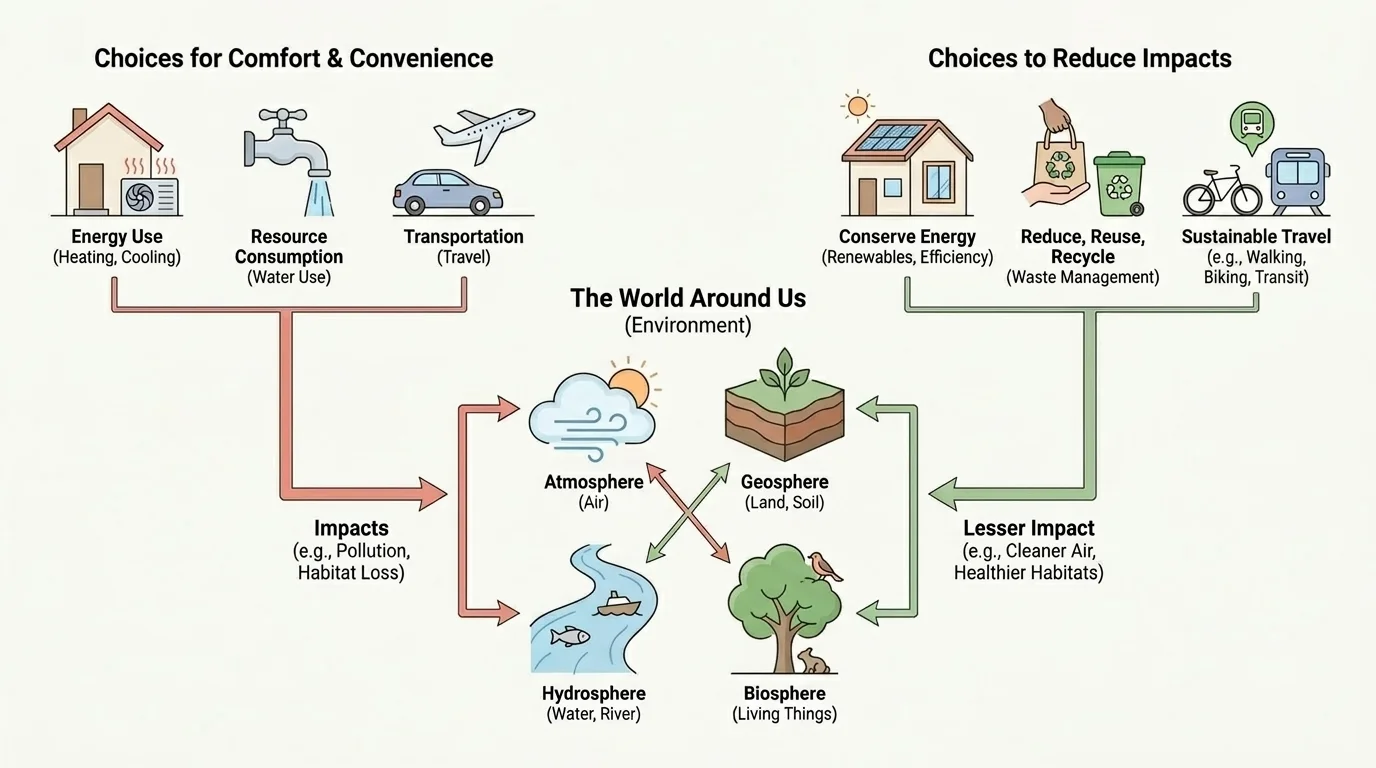
Air is all around us. We cannot see it, but we need it to breathe. Smoke and some gases can make the air more polluted. Cleaner air is better for people and animals.
Living things include people, trees, flowers, worms, birds, pets, insects, and fish. They need safe places, clean water, clean air, and food. As we saw with the connected Earth parts in [Figure 2], when land, water, or air becomes unhealthy, living things can struggle too.
Everything is connected
A tree grows in land, takes in water, and lives in air. A bird may rest in the tree and drink from a pond. If the pond is dirty or the tree is cut down, the bird's life changes. This is why caring for one part of Earth helps many other parts too.
People are living things too, so healthy environments help us as well. Clean parks, safe playgrounds, shady trees, and fresh air can make neighborhoods nicer places to be.
Small actions matter, and [Figure 3] shows simple ways children can help lower their impact on Earth. We may be small, but our choices can still help land, water, air, and living things.
Turning off the water while soaping hands can save water. Switching off a light when leaving a room can save energy. Using both sides of paper can save trees. Putting bottles, cans, and paper in the right bin can help materials be used again.
Picking up litter keeps parks and schoolyards cleaner. Planting flowers or trees can help insects and birds. Walking, biking, or riding with others when possible can mean fewer cars on the road. These choices can reduce harm while still helping people live well.
Using less does not mean going without what we need. It means using things wisely. A short shower uses less water than a very long one. A lunch packed in a reusable container makes less trash than many throw-away wrappers.
A single tree can give shade, provide a home for animals, and help keep air cleaner at the same time.
When families and schools make these kinds of choices often, the helpful effects can grow. The actions in [Figure 3] may look simple, but many simple actions together can make a big difference.
A place can change a lot depending on how people treat it, and [Figure 4] presents a park and pond that become healthier when people care for them. A messy place with litter can smell bad, look dirty, and be unsafe for ducks, fish, and people. A clean place with trash cans, plants, and paths can feel welcoming.
Think about a school garden. Children and teachers plant seeds in the soil, water them carefully, and pull weeds. Soon, flowers bloom and insects visit. The land is used by people, but in a thoughtful way that also helps living things.
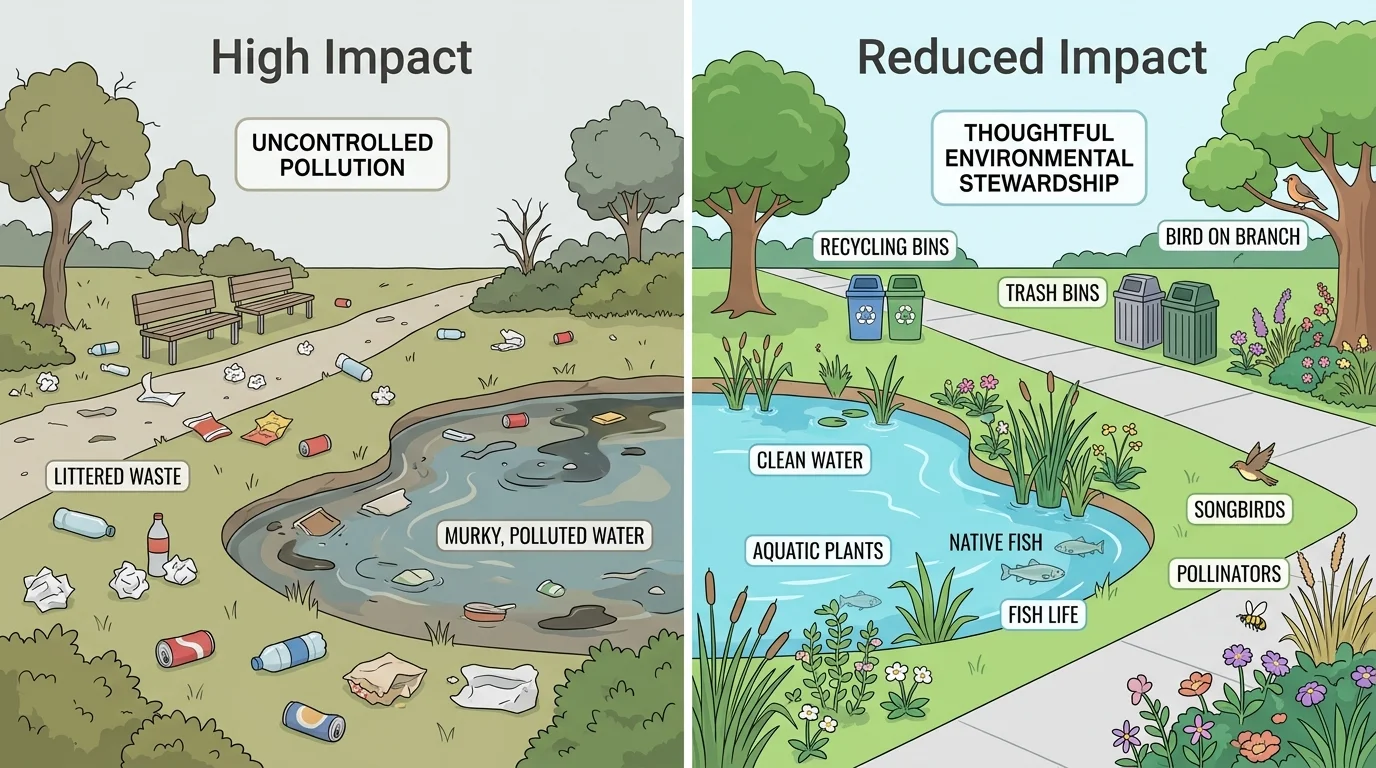
Now think about a pond near a road. If trash blows into the pond, fish and birds may be harmed. If people clean the area, use bins, and keep harmful liquids out of the water, the pond can stay healthier. This is one way people reduce damage to water.
Example: Helping a playground stay healthy
Step 1: Children notice trash on the ground after snack time.
Step 2: They put wrappers in the trash and bottles in recycling bins.
Step 3: The playground becomes cleaner for children, birds, and insects.
This example shows that a comfortable place can also be a cared-for place.
The clean-up idea connects back to the scene in [Figure 4]. When people make helpful choices, places often become safer and healthier for both humans and other living things.
One person can help, and a whole group can help even more. Families can save water at home. Schools can recycle and plant gardens. Neighborhoods can add trees, protect parks, and keep streams clean.
People do not have to stop using homes, roads, lights, or water. Instead, they can think carefully about how they use them. Comfortable living and Earth care can happen together when people choose wisely.
People need natural things from Earth, such as water, air, soil, plants, and animals. Caring for these things helps us now and in the future.
Everyday choices matter because Earth's systems are connected. When we protect land, keep water clean, use energy carefully, and care for animals and plants, we help make the world a better place to live.
